Canada Sees Potential in Guatemala: Trade, Investment, and Cooperation in a Relationship with Room to Grow
Note: This article presents an editorial analysis and synthesis based on an interview originally published by Prensa Libre.
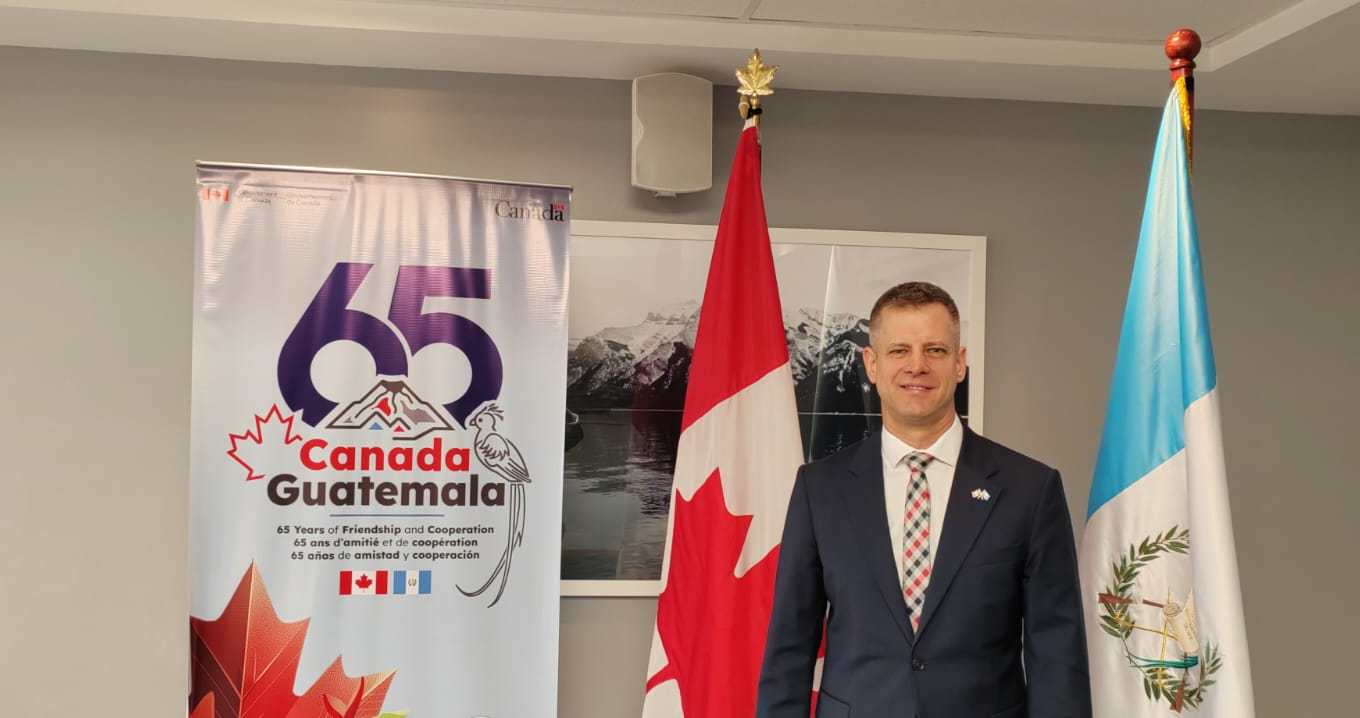
As Guatemala and Canada approach the 65th anniversary of diplomatic relations, the interview with Canadian Ambassador Olivier Jacques leaves one central idea: the bilateral relationship is solid, but it still has room to grow in trade, investment, education, tourism, and cooperation. Beyond its diplomatic symbolism, this message matters because it presents Guatemala as a country with concrete opportunities to strengthen its ties with Canada at a time when economic diversification and institutional confidence carry increasing weight in international decision-making.
One of the most important points is that Canada is not looking at Guatemala only through a historical or political lens, but also as an economic partner with real potential. That assessment is built on an existing foundation. According to the interview, Canadian companies already maintain a significant presence in Guatemala, including TELUS Digital, Dollar City, Kruger Energy, and Pan American Silver. This suggests that Canadian interest is not theoretical. There are already operations, jobs, and investments in place that can support new opportunities in the future.
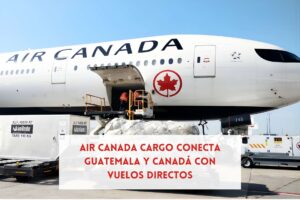
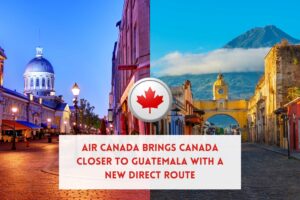
Air connectivity also emerges as a key factor. The direct flight between Montreal and Guatemala City, launched in October 2025, has received a positive market response and, although it was initially planned as a seasonal route from October to April, it was extended through June 2026 due to demand. That detail carries implications beyond tourism. Better physical connectivity between the two countries facilitates business travel, supports cargo movement, and improves the conditions for stronger bilateral trade.
At the same time, migration flows reflect an increasingly active people-to-people relationship. The article cites data from Guatemala’s Migration Institute showing that 85,349 Canadian citizens visited Guatemala in 2025, an increase of 5.41 percent compared to 2024. It also notes that nearly 13,000 Guatemalans traveled to Canada for reasons such as tourism, education, work, and residence. This human exchange reinforces the bilateral relationship because it creates networks, shared experience, and greater familiarity between both markets.
Another relevant issue is labor migration. Ambassador Jacques highlighted that more Guatemalans are traveling to Canada to work in agricultural and agri-food sectors, and he noted that Canada supports circular migration with Guatemala. At the same time, he warned about fraud in recruitment processes and emphasized that applicants should not pay to be selected. That warning is important because it shows that while real opportunities exist, clear information and the use of official channels remain essential to protect applicants.
In the areas of education and culture, the interview also points to new opportunities. Canada continues to be presented as an attractive destination for tourism, study, and work, and the ambassador mentioned the existence of scholarship and university exchange programs. Although no fixed annual quota was established for Guatemala, he estimated that around ten scholarships per year could be awarded to outstanding students. This adds another dimension to the bilateral relationship, one that goes beyond trade and also strengthens academic and professional development ties.
The long-standing cooperation between both countries is another important pillar. Canada has maintained cooperation programs with Guatemala since 1976 and currently allocates around Q130 million annually to initiatives related to security, development, Indigenous peoples, violence against women, and climate change. On the political side, the ambassador reaffirmed Canada’s interest in supporting Guatemala in strengthening democracy and protecting human rights, including support for election observation missions and monitoring institutional processes.
Where the message becomes most strategically important is in the area of investment. Jacques linked Guatemala’s attractiveness for foreign investors to recent progress in transparency, anti-money laundering measures, infrastructure, and economic stability. In particular, he mentioned the Comprehensive Law Against Money Laundering and Terrorist Financing, as well as the Priority Road Infrastructure Law. In his view, these types of measures send positive signals to international markets because they help build a more reliable business environment.
At the same time, the ambassador acknowledged that significant challenges remain. He pointed to the need to continue fighting corruption and strengthening the country’s economic climate. This combination of recognizing progress while also highlighting pending challenges makes his message especially meaningful: Canada does see potential in Guatemala, but that potential will depend largely on the country’s ability to consolidate clear rules, legal certainty, reliable institutions, and a competitive environment.
Democracy appears as part of that same framework. In the interview, Jacques underlined that respecting the will expressed at the ballot box and strengthening democratic institutions also contributes to building confidence for investment and economic development. From this perspective, political stability and the rule of law are not only governance issues, but also practical conditions for attracting capital, deepening cooperation, and expanding sustainable trade relations.
Overall, the analysis leads to a clear conclusion: Canada sees in Guatemala a relationship with solid foundations and real possibilities for expansion. There is already business presence, growing connectivity, active cooperation, and increased movement of people. But turning that potential into larger results will depend on Guatemala’s ability to continue improving its institutions, competitiveness, and investment climate. That seems to be the core message: the opportunity is there, but it requires trust, long-term vision, and continuity in reform efforts.
This analysis is based on the interview published by Prensa Libre.